Conference Room Hardware Debt Is Undermining Your Pexip Investment
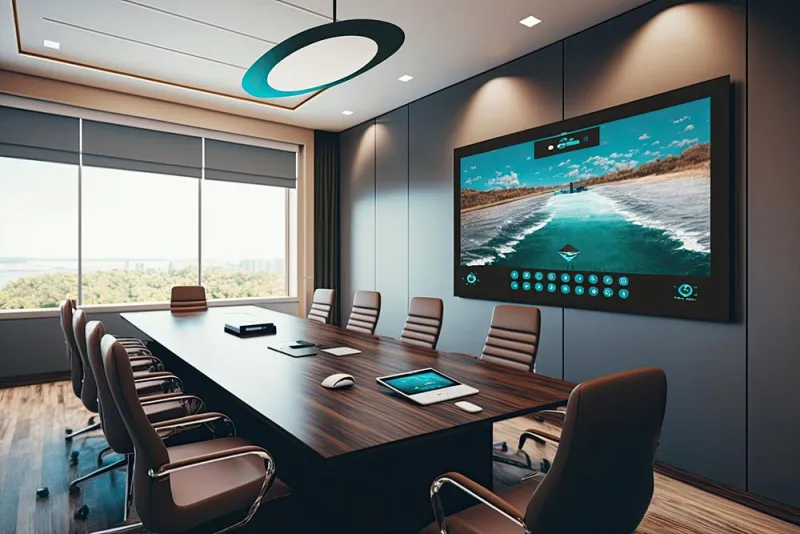
Photo: empty corporate conference room with video conferencing screen and AV equipment, via echologyav.com
There is a familiar pattern in enterprise video conferencing deployments. An organization invests considerable time and capital selecting, licensing, and configuring Pexip as its unified video platform. The network is assessed. Security policies are updated. IT staff complete training. Leadership declares the rollout a success.
Then, six months later, adoption metrics tell a different story.
Meeting rooms sit underutilized. Employees default to laptop-based calls from their desks. Helpdesk tickets accumulate around room booking and connection failures. And when IT investigates, the platform itself is rarely the source of friction. The culprit is almost always the hardware in the room.
This is the silent cost of conference room AV debt — and it is one of the most underestimated threats to a successful Pexip deployment.
The Gap Between Platform and Endpoint
Pexip is designed to operate across a broad range of endpoints, from modern certified room systems to browser-based clients. That flexibility is a genuine architectural strength. However, it also creates a risk: organizations sometimes interpret broad compatibility as permission to defer hardware investment indefinitely.
The result is a configuration mismatch that manifests at the point of use. A Pexip Virtual Meeting Room may be provisioned and performing flawlessly at the infrastructure level, while the room endpoint connecting to it is running outdated firmware, struggling with codec negotiation, or simply failing to register reliably due to an incompatible SIP stack.
Users do not distinguish between a platform failure and a hardware failure. They experience a meeting that did not work, and they draw the most obvious conclusion: the system is unreliable. Over time, that perception calcifies into behavioral avoidance — employees stop using the rooms and the platform investment depreciates accordingly.
What AV Tech Debt Actually Looks Like
Conference room AV debt rarely announces itself. It accumulates gradually, through deferred refresh cycles, inconsistent procurement standards, and the organizational tendency to treat room hardware as furniture rather than networked infrastructure.
In practice, it presents in several recognizable forms:
Firmware fragmentation. A fleet of room systems running three or four different firmware versions creates inconsistent behavior that is difficult to diagnose and nearly impossible to document at scale. What works in one room fails in another, and IT spends disproportionate time chasing room-specific anomalies.
Codec and resolution mismatches. Legacy endpoints that cannot negotiate H.264 High Profile or lack support for 1080p output create degraded call quality even when the Pexip infrastructure is configured for high-definition delivery. Users in those rooms consistently experience a lower quality meeting than their remote counterparts — a subtle but persistent source of dissatisfaction.
Touch panel and scheduling system conflicts. Many older room systems use proprietary scheduling integrations that do not align cleanly with modern calendar platforms. When a user books a Pexip VMR through Microsoft 365 or Google Workspace and the room panel fails to display or launch the meeting correctly, the friction is immediate and visible.
Peripheral failures. Cameras with fixed focal lengths that cannot accommodate reconfigured room layouts, microphones with inadequate pickup range for larger spaces, and displays that do not support content sharing at adequate resolution all contribute to a degraded experience that no amount of platform tuning can compensate for.
Conducting a Meaningful Room Technology Audit
Addressing AV debt begins with an honest inventory. Many IT organizations have asset records for their room systems, but those records often lack the operational detail needed to assess actual deployment health. A meaningful audit goes beyond model numbers and purchase dates.
Document firmware and software versions against current vendor-supported releases. Identify how many systems are operating outside of active support windows. For Pexip deployments, cross-reference endpoint firmware against Pexip's published compatibility documentation to identify known interoperability limitations.
Assess physical room configurations. Verify that camera placement, microphone coverage, and display positioning are appropriate for the current room layout and typical occupancy. Room reconfigurations — particularly common in organizations that have redesigned spaces for hybrid work — frequently render the original AV setup inadequate without anyone formally recognizing the change.
Capture user-reported friction. Helpdesk ticket data, meeting room utilization reports from room booking platforms, and direct feedback from administrative assistants who manage room reservations are all underutilized data sources. Patterns in that data often reveal which specific rooms are generating disproportionate support burden.
Test Pexip registration and call setup from each room system. Do not assume that a system that appears online is functioning correctly. A structured test protocol — covering VMR registration, inbound and outbound call setup, content sharing, and DTMF signaling — will surface issues that passive monitoring misses.
Building the Business Case for Synchronized Upgrades
IT leaders who have completed a room technology audit frequently find themselves in a familiar position: they have documented the problem clearly, but securing budget for hardware refresh requires a business case that speaks to organizational priorities beyond technical hygiene.
The most effective framing connects room hardware investment directly to the return on the Pexip platform investment already made. If an organization has spent significantly on Pexip licensing, implementation, and ongoing administration, and adoption rates in conference rooms remain low, the platform is delivering a fraction of its designed value. Hardware upgrades are not an additional cost — they are the remediation required to realize the value of an existing investment.
Quantifying the cost of underutilization strengthens this argument. Calculate the per-seat cost of the Pexip deployment and apply it to the percentage of registered room endpoints that show low or zero utilization. The resulting figure — essentially the portion of platform spend generating no return — typically provides a compelling anchor for hardware refresh conversations.
Additionally, consider the operational cost of supporting fragmented, aging hardware. If helpdesk data shows that a disproportionate share of video conferencing support tickets originate from specific rooms or system types, the cost of maintaining those systems can be compared directly against the cost of replacing them with current, Pexip-certified hardware.
Preventing Debt Accumulation Going Forward
The most durable solution to AV tech debt is a procurement and lifecycle policy that treats conference room hardware as networked infrastructure subject to the same refresh discipline applied to servers, switches, and access points.
This means establishing a defined hardware lifecycle — typically three to five years for room systems — and budgeting refresh cycles accordingly. It means standardizing on a short list of Pexip-certified endpoints to reduce the firmware and compatibility variability that complicates support at scale. And it means including room hardware assessment as a standing component of any platform upgrade or expansion project, rather than treating it as a separate workstream to be addressed later.
Pexip's value as an enterprise video platform is realized at the endpoint. When the hardware in the room cannot deliver what the platform is designed to provide, the investment gap is real — and it compounds quietly until the organization either addresses it deliberately or writes off adoption as a cultural problem that technology cannot solve.
In most cases, it is not a cultural problem. It is a hardware debt problem. And it is solvable.