Vendor Lock-In and the True Price of Convenience: Rethinking Enterprise Video Platform Selection

The Procurement Decision That Keeps Costing You Money
There is a particular kind of institutional logic that drives many enterprise software procurement decisions: when in doubt, buy what everyone else is buying. The reasoning is understandable. A widely adopted platform carries implicit validation—large vendor support organizations, abundant third-party integrations, and a familiar user experience that reduces training overhead.
But in enterprise video conferencing, this logic has led a significant number of IT organizations into a financial position they did not anticipate when they signed the initial contract. The platform that looked affordable at 500 seats becomes materially more expensive at 5,000. The proprietary features that differentiated the platform in year one become the technical barriers that make migration prohibitively costly in year three. And the negotiating leverage that enterprises expect to hold over large vendors often evaporates the moment switching costs become real.
This is vendor lock-in—and in the video conferencing space, it is more expensive than most IT teams calculate upfront.
How Lock-In Accumulates: A Technical Anatomy
Vendor lock-in in video conferencing does not typically arrive as a single, obvious constraint. It accumulates gradually, through a series of decisions that each seem reasonable in isolation.
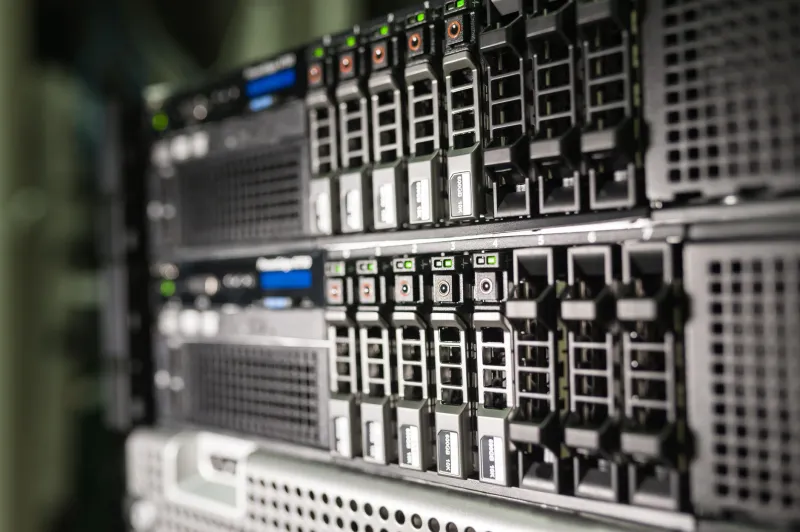
Proprietary endpoint hardware. Many major conferencing vendors offer certified room hardware that is deeply integrated with their platform. The hardware often performs better on the native platform than on competing services. Over time, enterprises build out meeting rooms with this hardware, creating a physical infrastructure that is difficult and expensive to migrate. A 200-room enterprise deployment can represent millions of dollars in hardware that becomes partially or fully stranded if the organization switches platforms.
Feature dependencies. Enterprise IT teams frequently build workflows around platform-specific features—custom meeting layouts, proprietary recording infrastructure, native directory integrations, or compliance tools that are only available within the vendor's ecosystem. These features become operational dependencies. Migrating away means either losing the functionality or rebuilding it on a new platform, both of which carry substantial cost.
User behavior entrenchment. At scale, user familiarity with a specific interface becomes a genuine migration barrier. Retraining thousands of employees on a new platform requires change management resources, temporary productivity losses, and help desk capacity that IT departments must absorb.
Contractual structures. Many enterprise video licensing agreements include multi-year commitments with substantial early termination penalties, annual true-up requirements that accelerate cost growth with headcount, and bundled services that are difficult to unbundle when the organization's needs change.
Each of these factors individually is manageable. In combination, they create a switching cost that effectively eliminates the enterprise's ability to negotiate with its vendor or respond to better alternatives in the market.
The Hidden Costs That Don't Appear in the Initial Proposal
When IT procurement teams evaluate video conferencing platforms, they typically model direct licensing costs—per-seat fees, room system licenses, and support contracts. What they frequently undercount are the indirect costs that accumulate over the contract lifecycle.
Integration maintenance overhead. Proprietary platforms require ongoing engineering effort to maintain integrations with adjacent enterprise systems—HR platforms, identity providers, compliance tools, and collaboration suites. When the vendor updates their API or deprecates an integration, internal IT teams absorb the remediation cost.
Compliance and data sovereignty exposure. For regulated industries—healthcare, financial services, federal contractors—using a platform that does not support self-hosted or private cloud deployment can create compliance complexity. If the vendor's data residency commitments do not align with organizational or regulatory requirements, the enterprise may need to maintain a parallel, compliant system, effectively doubling infrastructure costs for certain use cases.
Scalability pricing cliffs. Many popular platforms use pricing tiers that create non-linear cost increases at specific usage thresholds. An enterprise that grows from 3,000 to 4,000 users may find itself crossing into a pricing tier that adds disproportionate cost relative to the incremental usage.
Migration costs at contract end. When an enterprise eventually does decide to change platforms—whether for cost, capability, or strategic reasons—the migration itself carries significant cost. Data migration, endpoint reconfiguration, user retraining, and the temporary operational disruption of running parallel systems can collectively represent six to twelve months of the platform's annual licensing cost.
A Framework for Evaluating Platforms on Long-Term TCO
A more defensible approach to video conferencing procurement evaluates platforms across five dimensions that collectively reflect long-term total cost of ownership:
-
Interoperability depth. Does the platform support open standards (SIP, H.323, WebRTC) and integrate natively with multiple collaboration ecosystems? Platforms with broad interoperability reduce integration debt and preserve optionality.
-
Deployment flexibility. Can the platform be deployed on-premises, in a private cloud, or in a hybrid configuration? Enterprises with data residency requirements or specific security architectures need deployment flexibility that purely cloud-native platforms may not support.
-
Licensing transparency. Are pricing structures predictable at scale? Does the vendor offer clear documentation of how costs evolve with headcount, concurrent usage, or feature additions?
-
Migration reversibility. How difficult is it to export data, reconfigure endpoints, or transition users to an alternative platform? Platforms that make egress difficult are signaling that they rely on switching costs rather than ongoing value to retain customers.
-
Standards-based feature development. Does the vendor build features on open standards or on proprietary extensions? Proprietary feature development accelerates lock-in; standards-based development preserves compatibility with the broader ecosystem.
Pexip scores favorably across several of these dimensions. Its support for SIP, H.323, and WebRTC means that existing hardware investments are not stranded by a platform transition. Its self-hosted and hybrid deployment options address data sovereignty requirements directly. And its interoperability with Microsoft Teams, Google Meet, and other major platforms means enterprises are not forced to choose between Pexip and their existing collaboration stack—they can use both.
The Organizational Flexibility Argument
Beyond pure cost analysis, there is a strategic argument for interoperable, non-proprietary conferencing infrastructure: it preserves organizational flexibility in ways that are difficult to quantify but materially valuable.
An enterprise that is not locked into a single vendor can respond to market changes—whether that means adopting a new collaboration platform that better suits a post-merger integration, renegotiating aggressively when a vendor raises prices, or piloting new conferencing technology without dismantling existing infrastructure.
IT organizations that have been through a major video platform migration uniformly report that they underestimated the cost and overestimated the ease of the transition. The organizations that avoided the worst outcomes were those that had maintained some degree of platform independence—through interoperable infrastructure, standards-based endpoints, or deliberate avoidance of proprietary feature dependencies.
Popularity is not a proxy for fit. Before signing the next multi-year video conferencing agreement, enterprise IT teams should ask not just what the platform costs today, but what it will cost to leave it three years from now. The answer to that question is often more revealing than anything in the initial proposal.